Giving EV Batteries a Smarter Second Life.
IntactPack Energy Systems is developing an intelligent platform for transforming qualified retired EV battery packs into monitored, grid-interactive stationary energy resources.
Our approach combines battery qualification, full-pack integration, local energy intelligence, connected monitoring, lifecycle data, and future grid-service capabilities to extend useful battery life while supporting renewable energy and resilience.
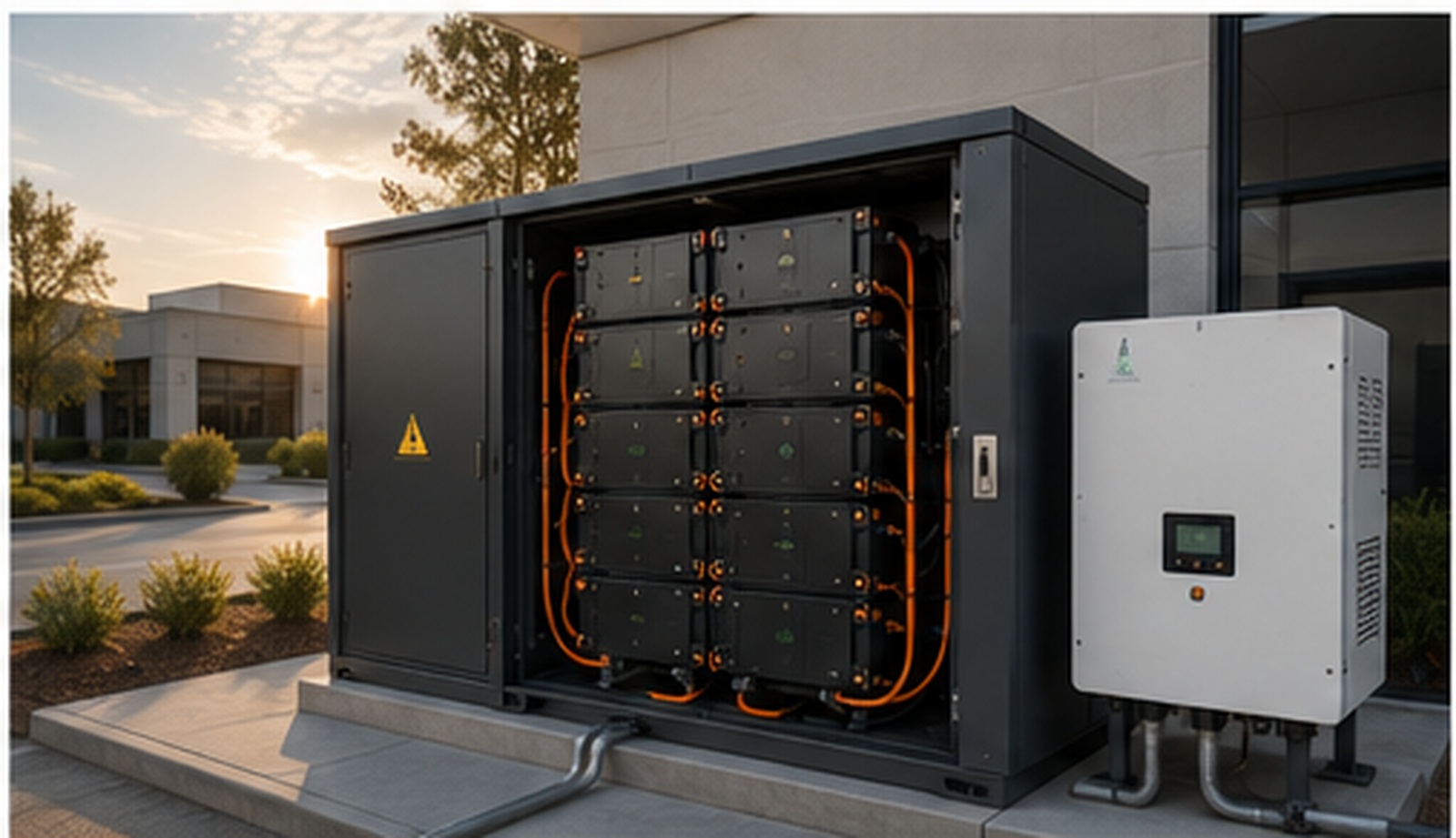
Conceptual rendering. Technology under development. Final configurations are subject to engineering, certification, interconnection, and permitting requirements.
A New Layer Between EV Retirement and Recycling
Electric vehicles are creating a rapidly growing population of high-capacity battery packs. Automotive retirement does not necessarily mean battery end-of-life.
Many packs may retain useful energy-storage capability after automotive service, but responsible second-life deployment requires more than simply connecting a used battery to an inverter. It requires evaluation, qualification, controlled integration, continuous monitoring, and an appropriate path to final recycling.
IntactPack Energy Systems is developing that missing intelligence layer.
Reuse qualified batteries when appropriate. Recycle them when they are not.
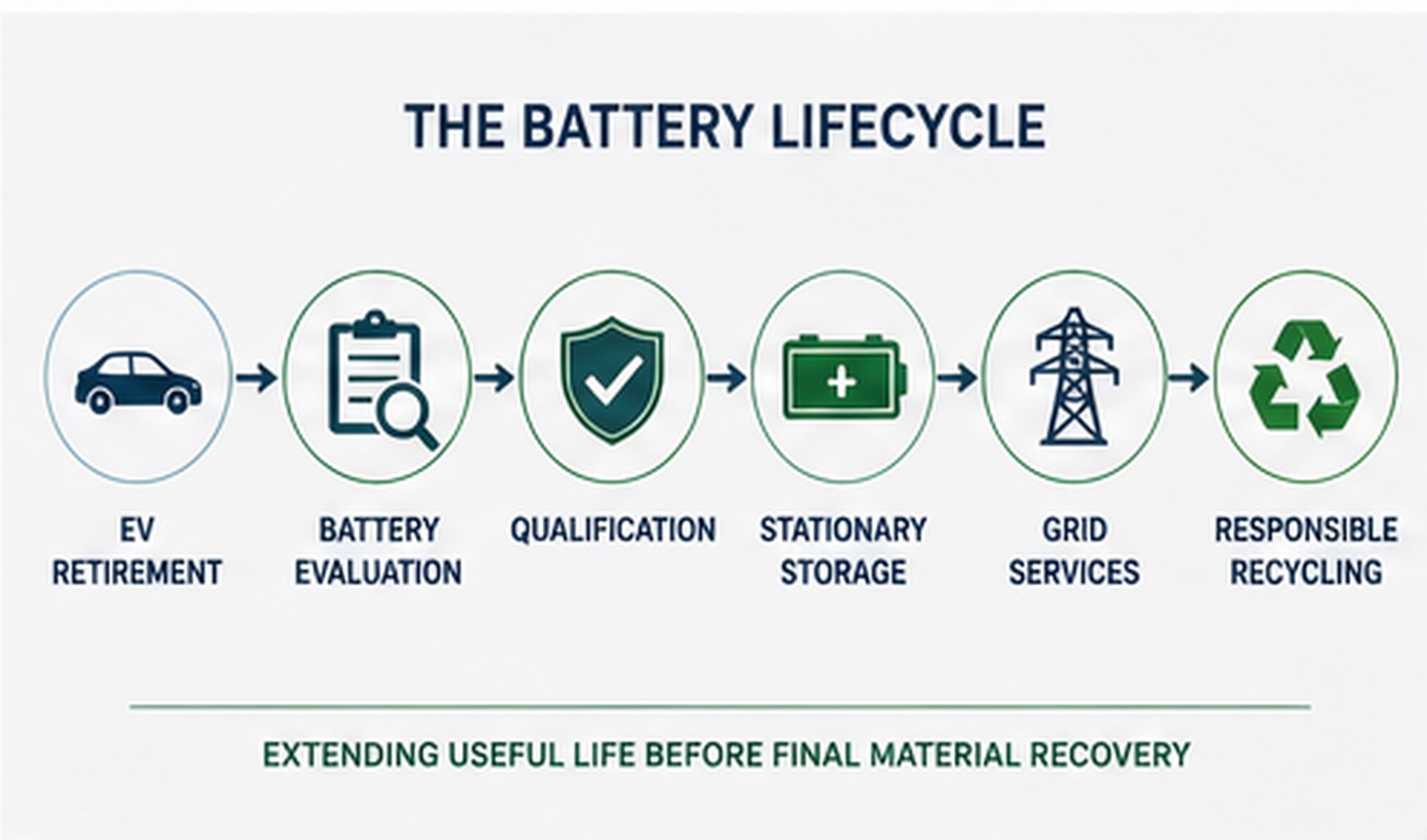
Extending useful battery life before final material recovery.
Four Core Capabilities
Battery Qualification
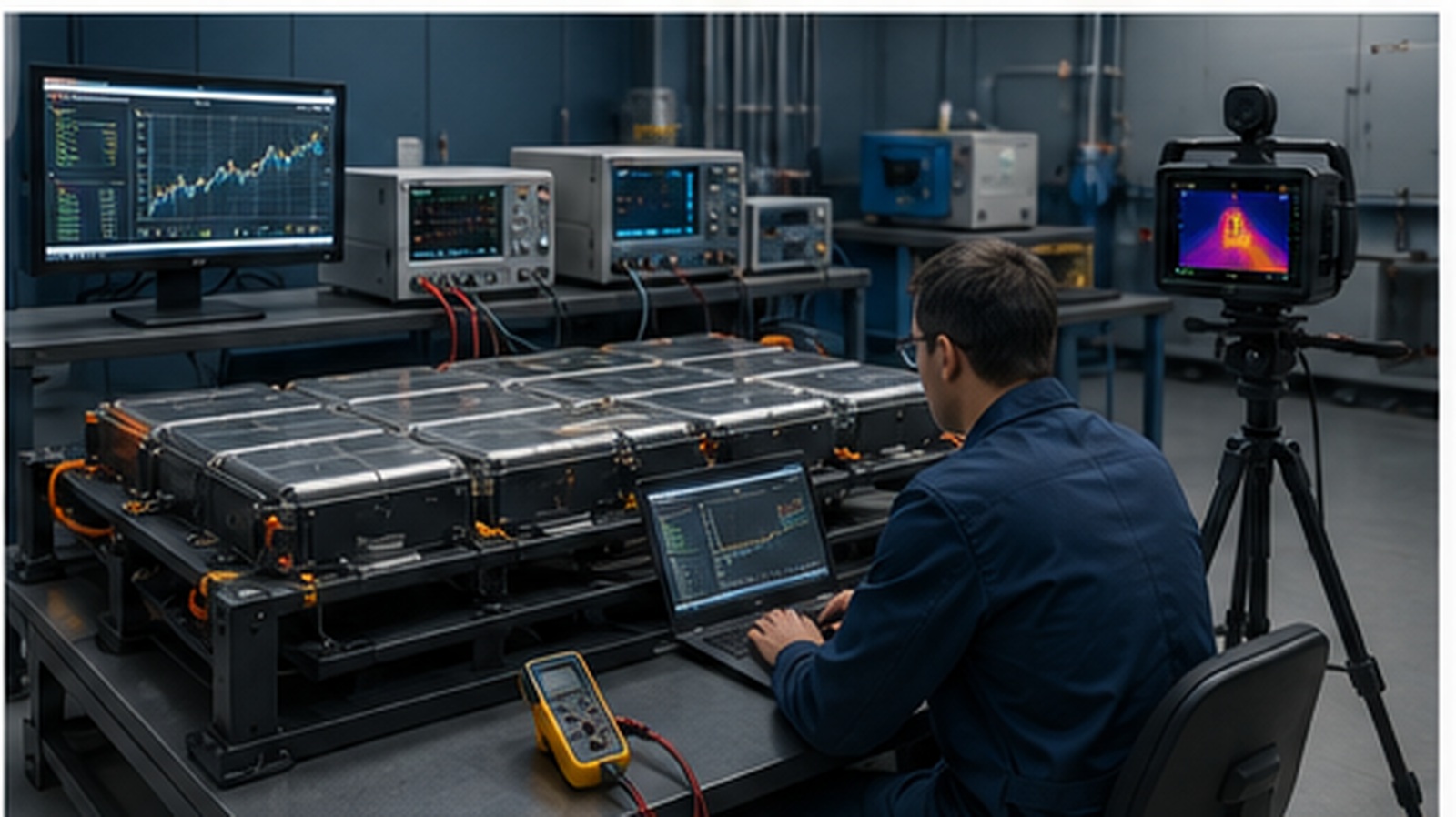
Every candidate battery should be evaluated before deployment. IntactPack is developing a structured process for battery admission, health characterization, operating classification, and lifecycle tracking.
Intelligent Integration
The platform is being designed to integrate suitable complete EV battery assemblies with stationary energy systems while preserving useful OEM battery architecture where technically appropriate.
Connected Operations
Edge and cloud capabilities provide visibility into battery condition, site energy flows, alarms, operating history, system availability, and maintenance needs.
Grid & Resilience
The platform is intended to support renewable-energy integration, backup reserves, demand management, microgrids, and future distributed-grid services.
Preserve Engineering Value
Modern EV traction batteries are highly engineered systems incorporating mechanical structure, thermal management, sensing, battery-management electronics, and high-voltage protection.
Where a complete battery has passed IntactPack's qualification process and is technically appropriate for stationary use, the development philosophy is to preserve useful OEM system architecture rather than unnecessarily dismantling and rebuilding the battery at module level.
This approach is intended to preserve engineering value while reducing unnecessary reconstruction and creating a more repeatable pathway to second-life use.
Focused First. Expandable by Design.
The initial IntactPack development program includes complete battery-pack architectures used across high-volume EV platforms, including selected Tesla Model S, Model X, Model 3, and Model Y battery families. The platform is being designed for broader OEM compatibility over time.
This provides a defined, high-volume starting point for battery qualification, field learning, and software development. The longer-term architecture is intended to support additional EV manufacturers and battery chemistries through a common stationary-energy framework.
Built for California's Energy Future
California is simultaneously experiencing rapid EV adoption, increasing renewable generation, growing energy-storage demand, grid-flexibility requirements, wildfire and outage resilience challenges, and greater attention to battery lifecycle management.
IntactPack is being developed in California around these intersecting needs.
The long-term objective is to convert qualified second-life batteries into intelligent distributed energy resources capable of supporting facilities, communities, microgrids, and the evolving electric grid.
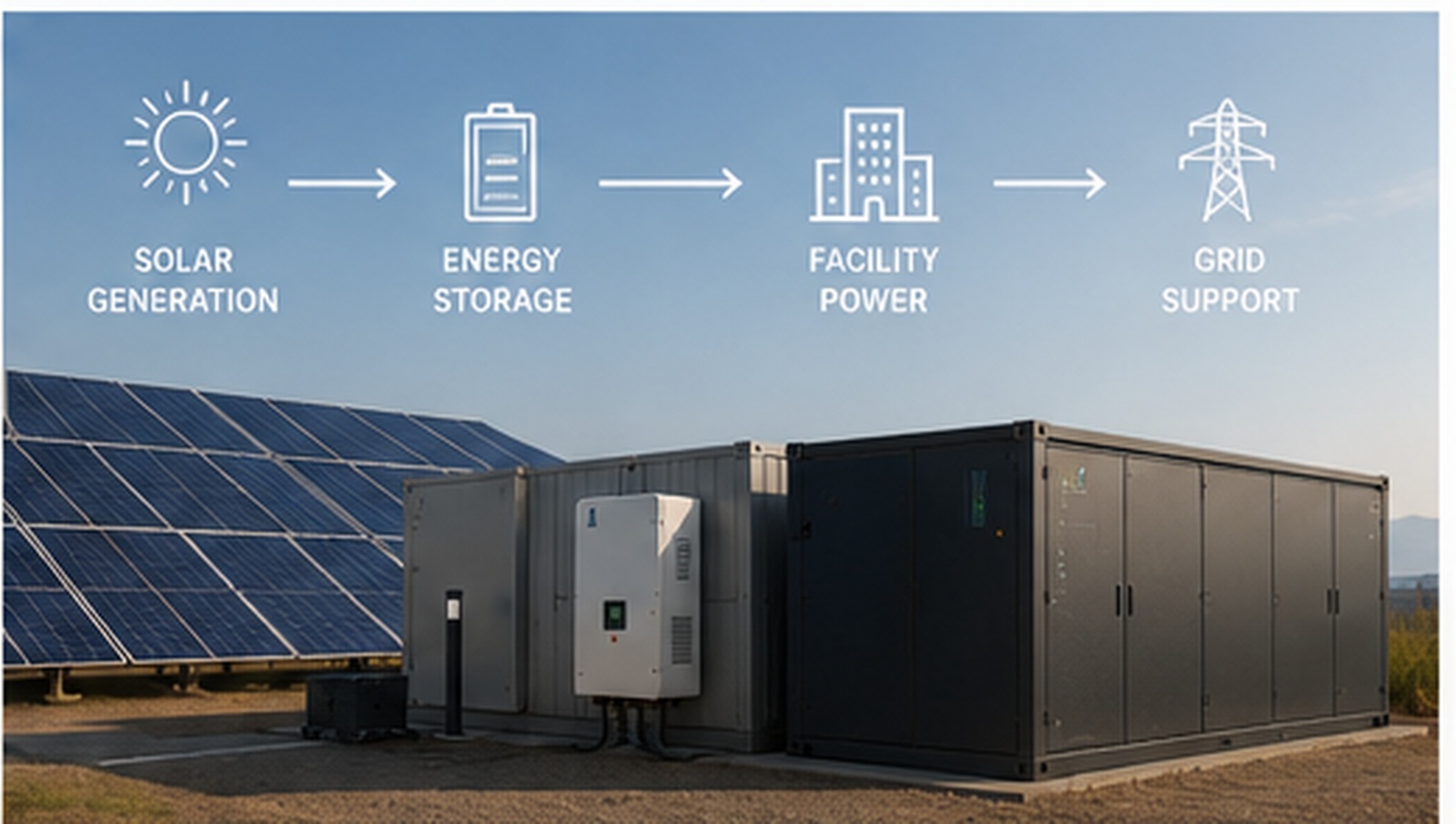
Capture, store, and deliver clean energy when it matters most.
Safety Begins Before Installation
Second-life energy storage should begin with battery qualification and continue through the entire operating life of the system.
IntactPack's safety philosophy combines candidate-battery screening, available OEM battery information, local operating limits, electrical protection, independent environmental sensing, remote alerts, and practical outdoor enclosure design.
Prototype systems may independently monitor abnormal temperature, smoke or off-gas, coolant leakage, and enclosure conditions. Abnormal events can trigger progressive responses such as alerts, power reduction, shutdown, and electrical isolation.
Local protection takes priority over remote control.
From Automotive Use to a Second Life
Select a stage to see what happens next.
Building the Second-Life Energy Ecosystem
IntactPack is interested in conversations with energy-storage developers, utilities, microgrid operators, universities, battery suppliers and recyclers, testing organizations, certification partners, community resilience hosts, and strategic investors.
Discuss a Partnership