Reuse Before Recycle.
Extend useful battery life where appropriate, then recover materials responsibly.
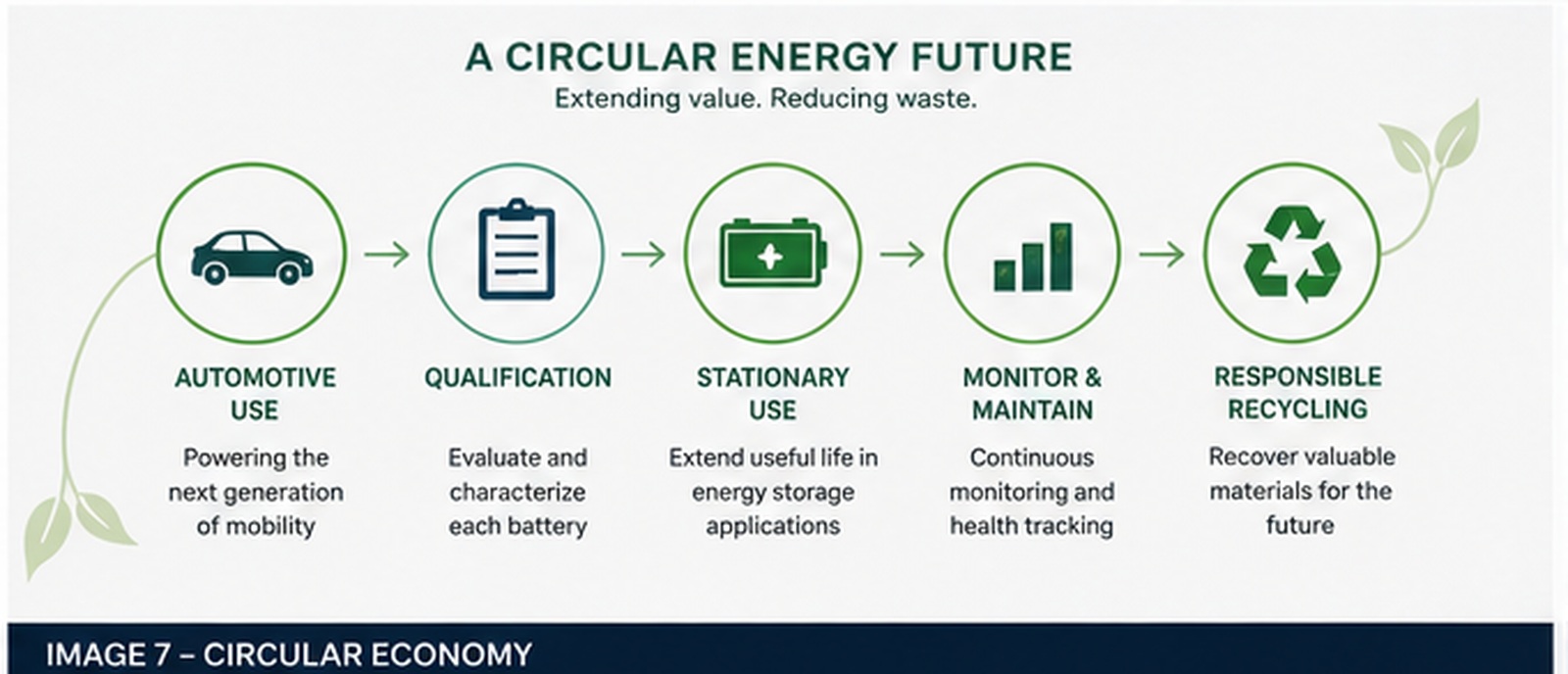
Reuse when qualified. Recycle when it's time.
Battery recycling is essential. But recycling does not always need to be the first step after automotive retirement.
Where a battery remains suitable for continued service, a controlled stationary second life may extract additional productive value from the materials, energy, manufacturing, and engineering already invested in that pack.
IntactPack supports a lifecycle philosophy of:
Evaluate
Determine whether a candidate battery remains suitable for continued use.
Reuse
Deploy qualified batteries only in appropriate applications and operating ranges.
Monitor
Continuously track asset condition, performance, and lifecycle history.
Retire Responsibly
Remove batteries that no longer meet deployment requirements and direct them toward an appropriate recycling pathway.
Extending the Value of Engineered Materials
EV batteries contain significant engineered materials and manufacturing value. Extending useful service life can increase the productive use obtained from those resources before final material recovery.
Meet the Team Behind IntactPack
Learn more about the engineering background and mission driving the company.
About IntactPack